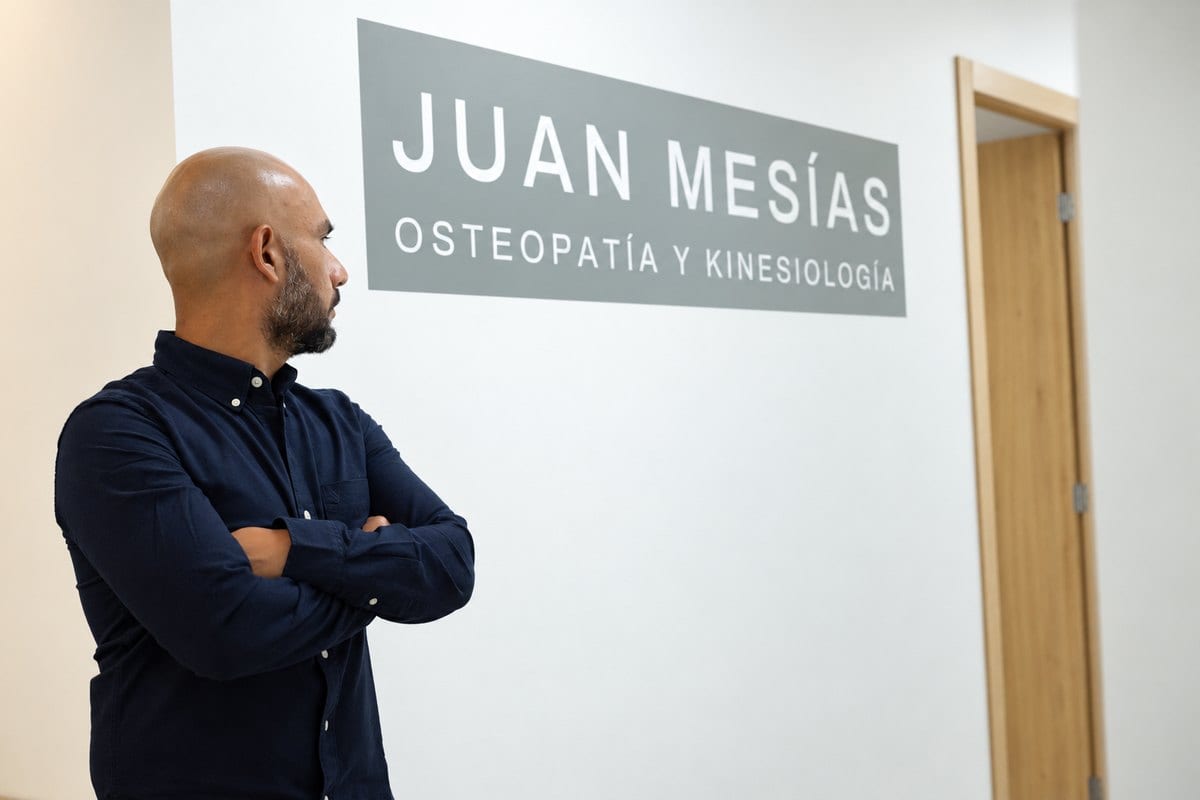
When pain has lasted months, the cause is almost never where it hurts.
Juan Mesías is a physiotherapist and osteopath in Quito. He treats long-standing pain: the kind you still have after surgery or a full course of therapy, once you have already been discharged.
- Physiotherapist and osteopath
- Part of the country's first generation of osteopaths
- 11 years of training
- 5 in physiotherapy and 6 in osteopathy
- 17 years of clinical practice
- A practice focused on chronic pain
- One-to-one sessions
- Never two patients at once
If your pain has lasted months, you are Juan's patient.
Age, sex and activity are beside the point. Chronic pain shows up in a child, in someone who works sitting down, in an older adult and in a high-performance athlete alike.
The most common case: someone who has already had surgery or completed a full course of physiotherapy, was discharged, and still hurts.
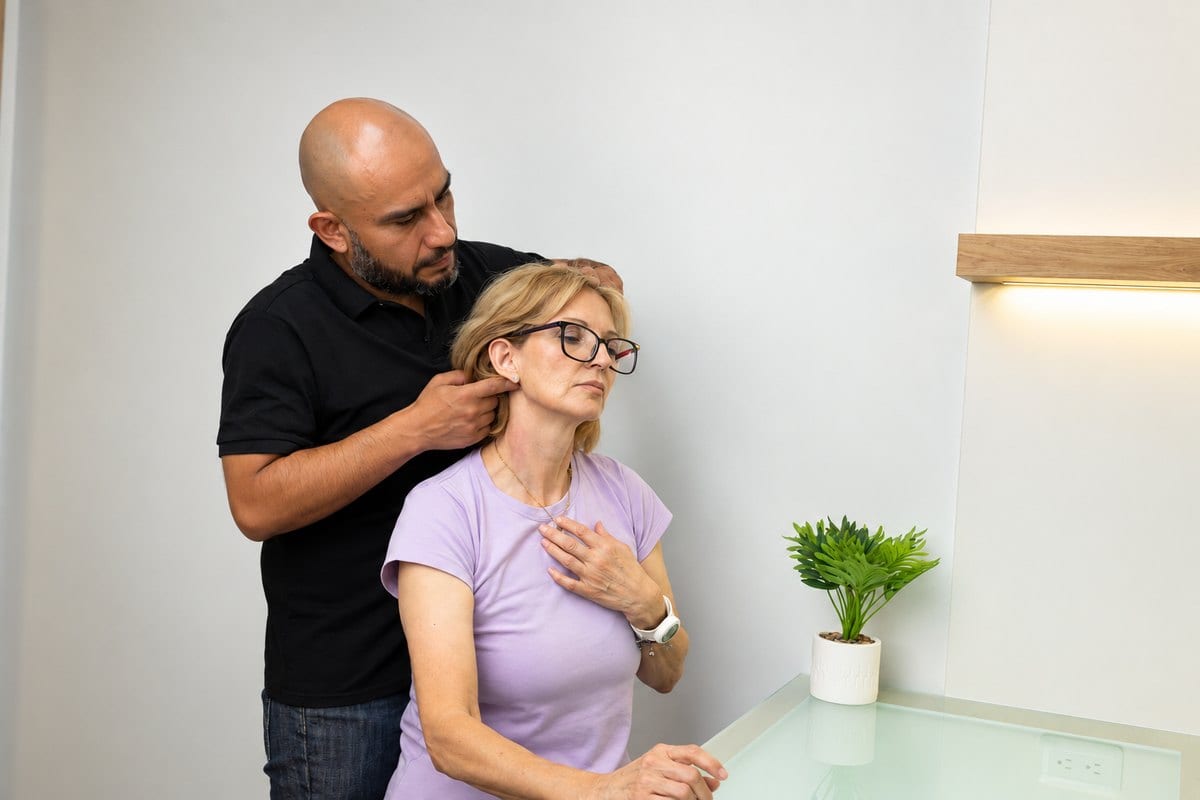
- You finished a full course of physiotherapy and were discharged.
- You had surgery, the check-ups said you had recovered, and the pain stayed.
- The pain moves, or shows up far from where it started.
- You have been told there is nothing wrong, and you still feel it.
- It eases for a while and comes back, again and again, for months.
Pain is a symptom. It is almost never the problem.
If you take a blow, a cut or a fracture, the work happens where it happened, because that is where the problem is. That is local therapy and it works.
But when pain has lasted more than three months, the cause is usually no longer where you feel it. Some pain is the reflection of something else, elsewhere in the body.
Physiotherapy treats the segment that hurts. Osteopathy lets you go looking for the origin. Juan holds both qualifications, so he asks both questions in the same session — and does not charge for two.
What he works with.
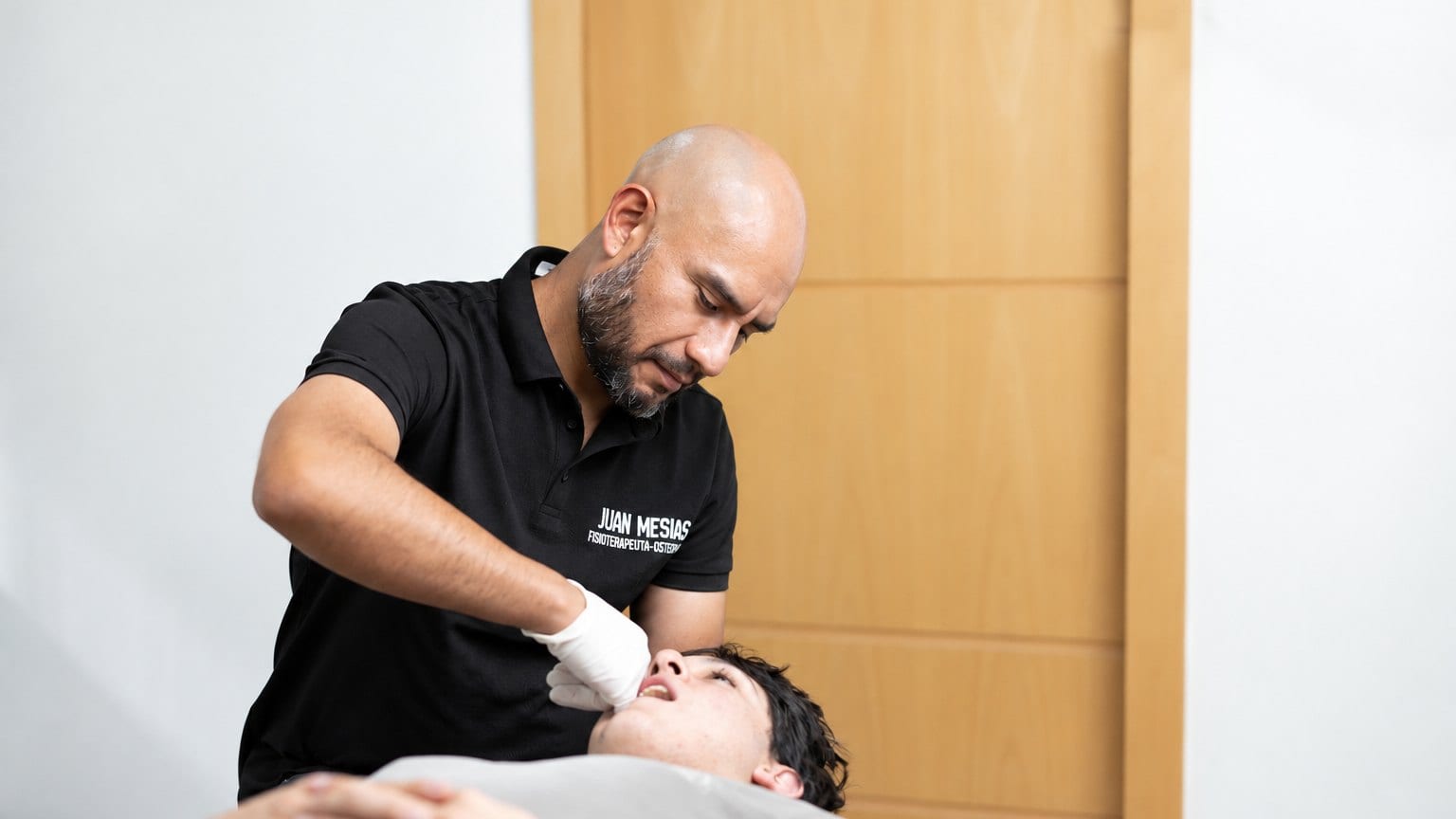
Osteopathy
Manual medicine grounded in the anatomy and neurophysiology of every structure in the body.
It is a therapeutic discipline aimed at regulating and restoring, through movement, the function of the musculoskeletal and ligamentous, visceral and cranial systems, as well as modulating the autonomic nervous system.
Different techniques are applied depending on the dysfunction, the tissue and the patient. Every session involves continuous assessment and a decision about which technique to use.
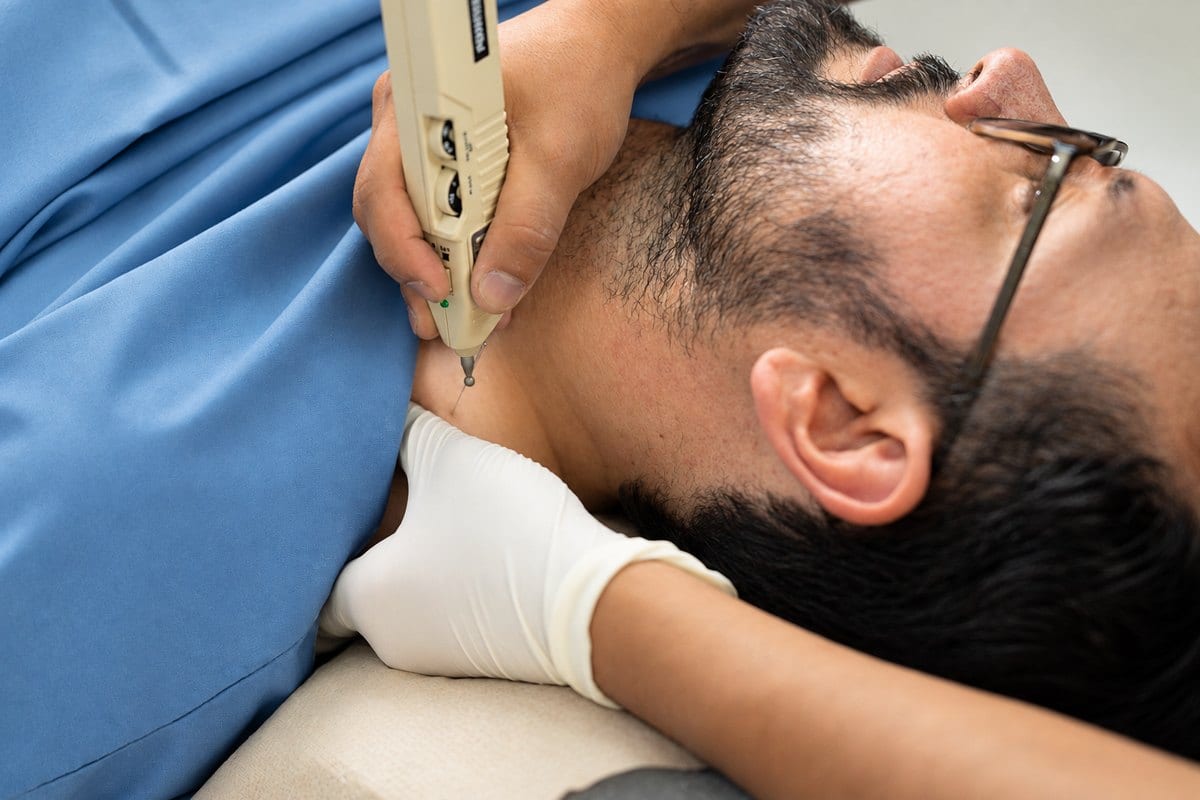
Intramuscular stimulation (IMS)
An advanced form of dry needling, also known as the Gunn technique.
It is a minimally invasive physiotherapy treatment, designed specifically for chronic pain of neuropathic and musculoskeletal origin.
Unlike traditional acupuncture, which works on energetic balance, IMS is grounded in strictly neuroanatomical, Western-medical principles.
It reaches tissues and muscles that manual therapy and conventional massage cannot. Neither is booked separately: which one applies is decided during the assessment, within the same session.
How a session goesOne kind of session, and the hour is entirely yours.
One kind of session, one to one. Assessment and treatment happen in the same room and the same hour: they are not separate services and Juan does not split them. How many sessions a case needs depends on the case, and that is discussed after the first assessment.
- Session price
- $40
- Duration
- 60 minutes
- Minimum notice to book
- 2 hours
- To cancel or reschedule
- 4 hours ahead
- Home visits
- No. At the practice only.
The same price for the first consultation and for every treatment session. If the case needs a longer plan, a package is arranged with a discount for advance payment.
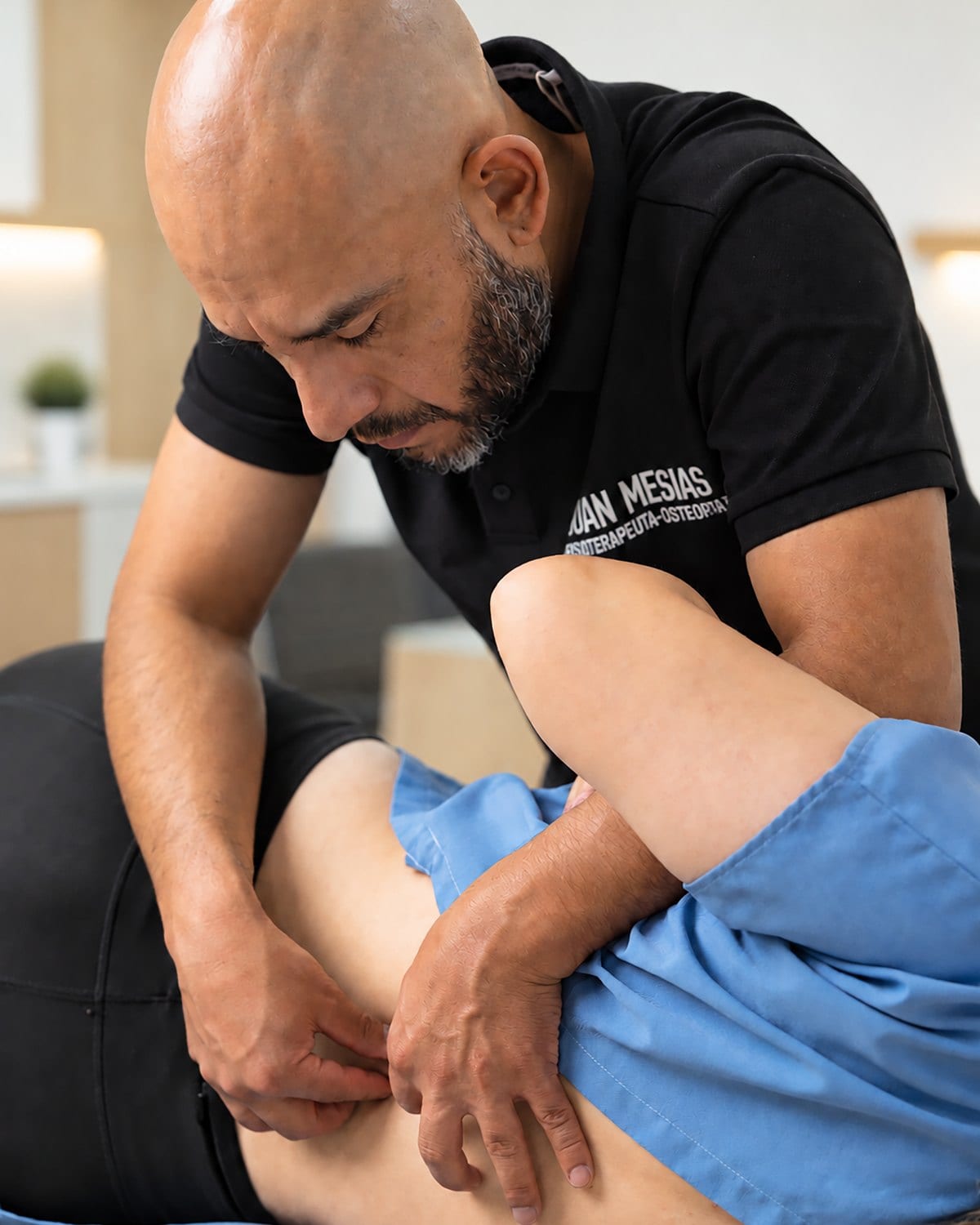
Eleven years of training, not a weekend course.
The school where Juan trained requires a physiotherapy degree just to apply. There is no way in without it. That is the difference between a regulated profession and a certificate earned over two Saturdays.
Physiotherapist and osteopath
Very few practitioners in Ecuador hold both qualifications in full, and Juan belongs to the country's first generation of osteopaths. Physiotherapy treats the segment that hurts; osteopathy asks why it hurts. Holding both means asking both questions in the same session.
Eleven years of training
Five years of physiotherapy at Universidad Técnica de Ambato and six of osteopathy at the Escuela de Osteopatía de Madrid, with a master's from Universidad Pontificia de Salamanca in between. This is not a weekend course.
The session belongs to one person
Juan never sees several patients at once. There are no shared rooms and no time split between tables. The whole block belongs to whoever booked it.
He assesses first, and refers out when it isn't his case
If the assessment turns up something that belongs to another professional, Juan says so and refers. Pain of cardiac origin goes to a cardiologist; a migraine coming from a dental infection goes to the dentist. He does not take a case just to take it.
What people consult about most.
These are common reasons for consultation, not a promise of results. Every case is assessed before it is treated, and if it belongs to another professional, Juan refers it on.
- Chronic pain
- Disc herniation
- Chronic low back pain
- Lumbosciatica
- Headaches
- Carpal tunnel syndrome
If there is a slot today, today works.
Just 2 hours' notice is enough. There is no need to wait until next week, or to bring scans to the first session.
Book a sessionConsulting hours
- Mon, Wed and Fri
- 10:00 – 19:00
- Tue and Thu
- 08:00 – 19:00
- Saturdays
- 08:00 – 12:00
- Sundays
- Closed