Physiotherapy is not a second appointment. It is the other half of the same one.
Juan is a physiotherapist before he is an osteopath: 5 years of university training in physical therapy, which is also the requirement for entering the school of osteopathy. Both happen in the same session because he does not separate them.
Kinesiology and physiotherapy are the same field. The words are used interchangeably depending on the country, and here they name the same thing: Juan's degree is in physiotherapy.
Two questions about the same pain.
Physiotherapy
What is happening here
- Assessing movement: which range was lost, and since when.
- Manual work on the tissue that is limiting that movement.
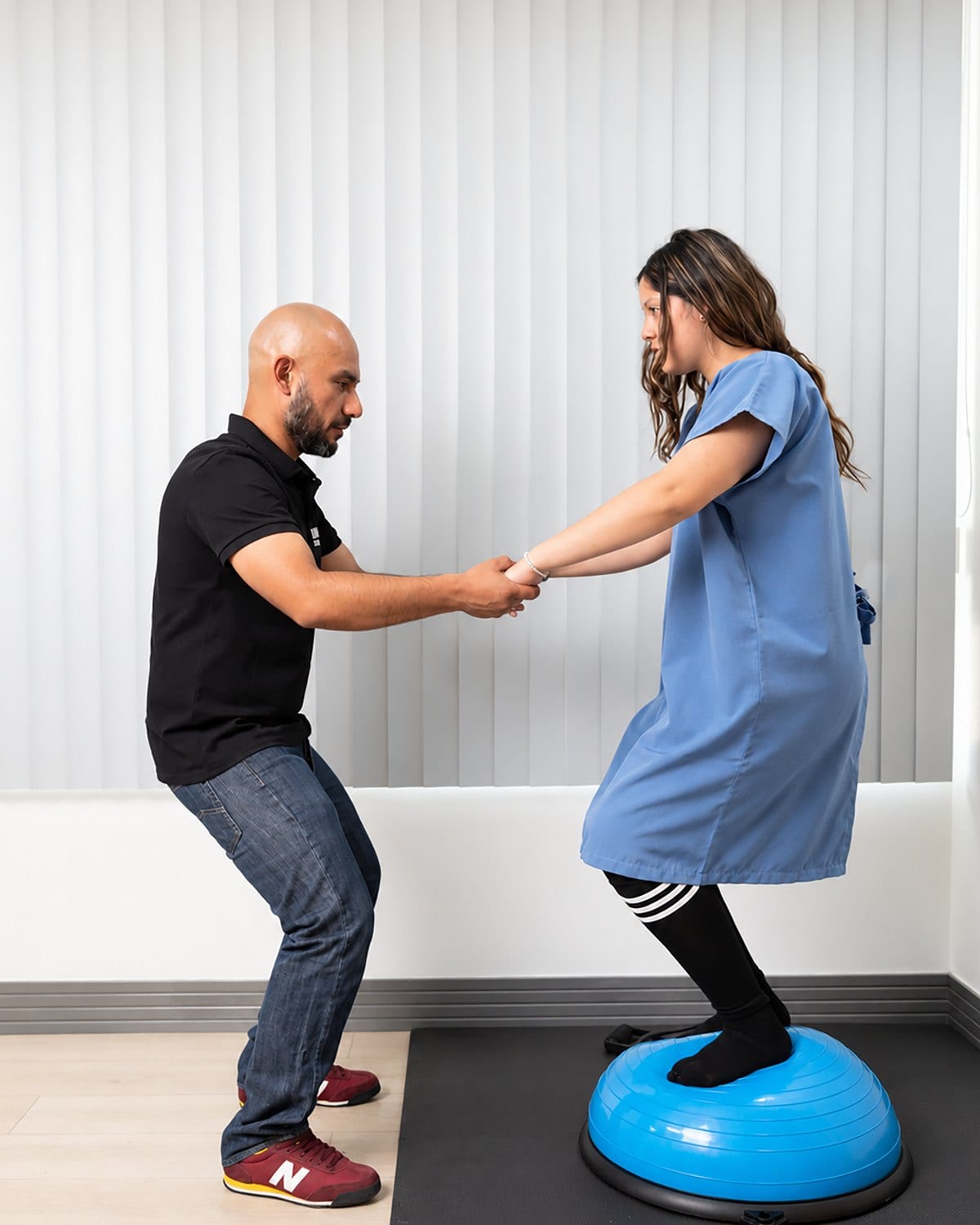
- Rebuilding strength and control where pain switched them off.
- Intramuscular stimulation when tissue does not respond to the hand.
Osteopathy
Why it is happening
- Reading the whole body, not just the segment that hurts.
- Looking for the origin when pain has lasted months and will not ease.
- Working on relationships at a distance: what pulls from elsewhere.
- Cranial and visceral work when the case calls for it.
Almost nobody in Quito can do both. Juan does both, in the same block of time, and charges for one session.
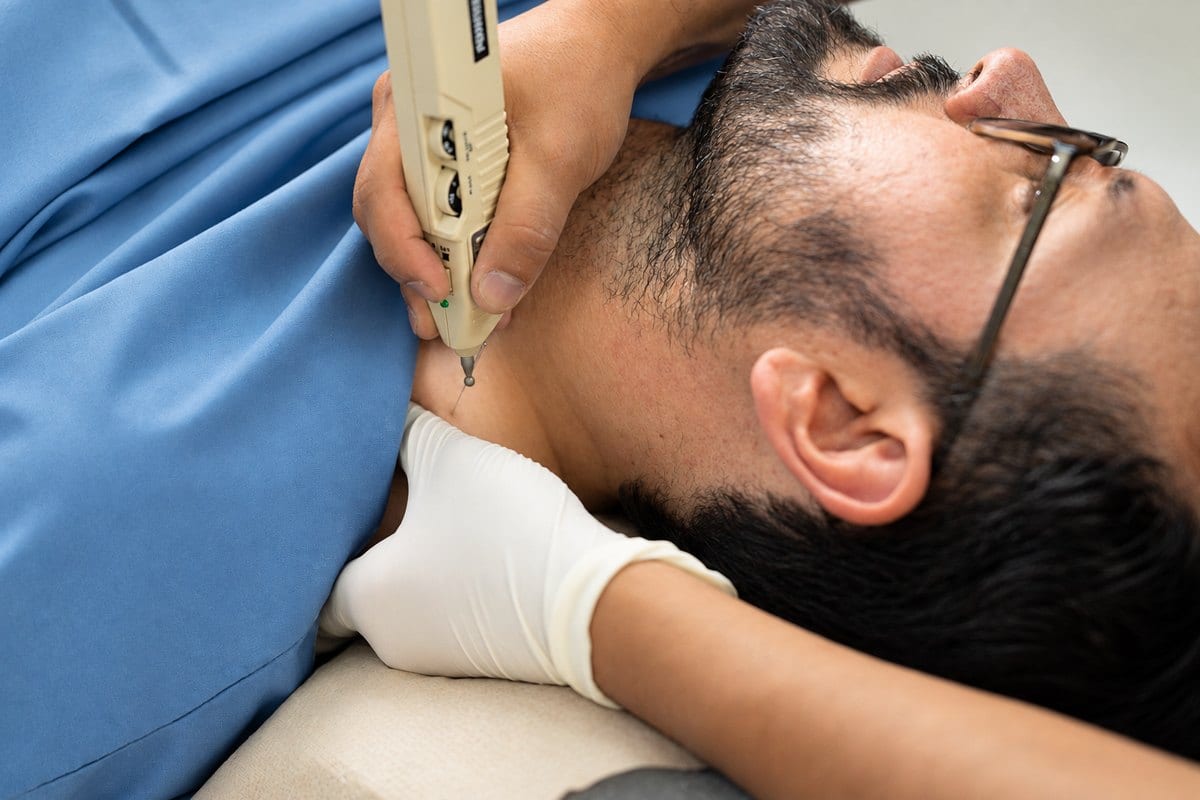
Intramuscular stimulation (IMS)
An advanced form of dry needling, also known as the Gunn technique.
It is a minimally invasive physiotherapy treatment, designed specifically for chronic pain of neuropathic and musculoskeletal origin.
Unlike traditional acupuncture, which works on energetic balance, IMS is grounded in strictly neuroanatomical, Western-medical principles.
It reaches tissues and muscles that manual therapy and conventional massage cannot.
- 01
Thin acupuncture needles are inserted into the belly of the muscle.
- 02
The practitioner looks for taut muscle bands or trigger points pressing on a peripheral nerve. As the needle enters, the muscle produces an involuntary reflex contraction that forces it to release its accumulated tension.
- 03
A low-frequency electrical device may then be used to enhance endorphin release and reduce the nerve's hypersensitivity.
How the first session goes.
The first appointment is consultation and assessment. A proper evaluation takes the whole hour, so treatment begins from the second session.
The case is discussed
How long it has hurt, what you already tried, what eases it and what makes it worse. If you bring scans, they are reviewed against what the examination finds.
You are assessed
Movement, weight-bearing and palpation. This is where it becomes clear whether the origin lies elsewhere, or whether the case belongs to another professional.
You leave with a plan
What he found, what to expect, and whether you need to come back. If Juan thinks he cannot help you, he says so and refers you on.
Osteopathy and physiotherapy do not replace medical diagnosis or treatment. Where there is an underlying condition, Juan refers the patient to the appropriate specialist.
Book a session